Tuesday, September 3, 2019

Awesome deal knocks $50 off the Bose QuietComfort 35 II Wireless Bluetooth headphones

As more handset makers are starting to ditch the headphone jack, it means that we need to start seeking out more wireless alternatives. If noise-cancellation is a feature that you want to be part of your wireless headphones, then there is a good chance that Bose's QuietComfort series of headphones might be familiar to you.

In fact, the Bose QuietComfort 35 II is currently enjoying a $50 discount on Amazon right now, where its price has been knocked down from $349 to a more affordable $299. While some say that Sony's noise-cancelling headphones sound more superior to the Bose's, we suppose that's just a personal preference. Plus, Bose's QuietComfort series of headphones are known to be pretty comfortable if you plan to wear them for extended periods of time.

The headphones will feature built-in microphones that will allow you to use it as a hands-free device. There is also support for both Google Assistant and Alexa, so you'll be able to use it to control other devices that are supported by either digital assistant. If this sounds like something you might be interested in, head on over to Amazon to get in on the deal before it's over.

Buy On Amazon


from Phandroid https://ift.tt/2ZFIyro
via IFTTT

Monday, September 2, 2019

Samsung Galaxy Watch Active 2’s ECG and fall detection features will come in 2020

While the Samsung Galaxy Watch Active 2 features a brand new design with a touch bezel interface, it does feel like it is a bit lacking in the health department. There is some good news though, because if you're looking for a health-focused smartwatch but you don't want to buy the Apple Watch, you're in luck.

According to a recent report from SamMobile, it has been revealed that ECG and fall detection features will be arriving in Q1 2020. Samsung had previously confirmed that both these features will not be launched together with the smartwatch, but they stopped short of confirming when it will arrive.

It should be noted that given that these are health-related features and could be considered a medical feature, the FDA needs to approve them before they are released to the public, hence the delay. If SamMobile's report is accurate, then we should be able to expect those features in 2020.

This involves a bit of waiting as the report claims that it will arrive in February, so hopefully that will prove true. In the meantime, if you like the watch as it is even without the ECG and fall detection features, the Samsung Galaxy Watch Active 2 will be released on the 23rd of September in the US.

Source: SamMobile


from Phandroid https://ift.tt/2zHY8UP
via IFTTT

This is what the Samsung Galaxy Fold 2 could look like

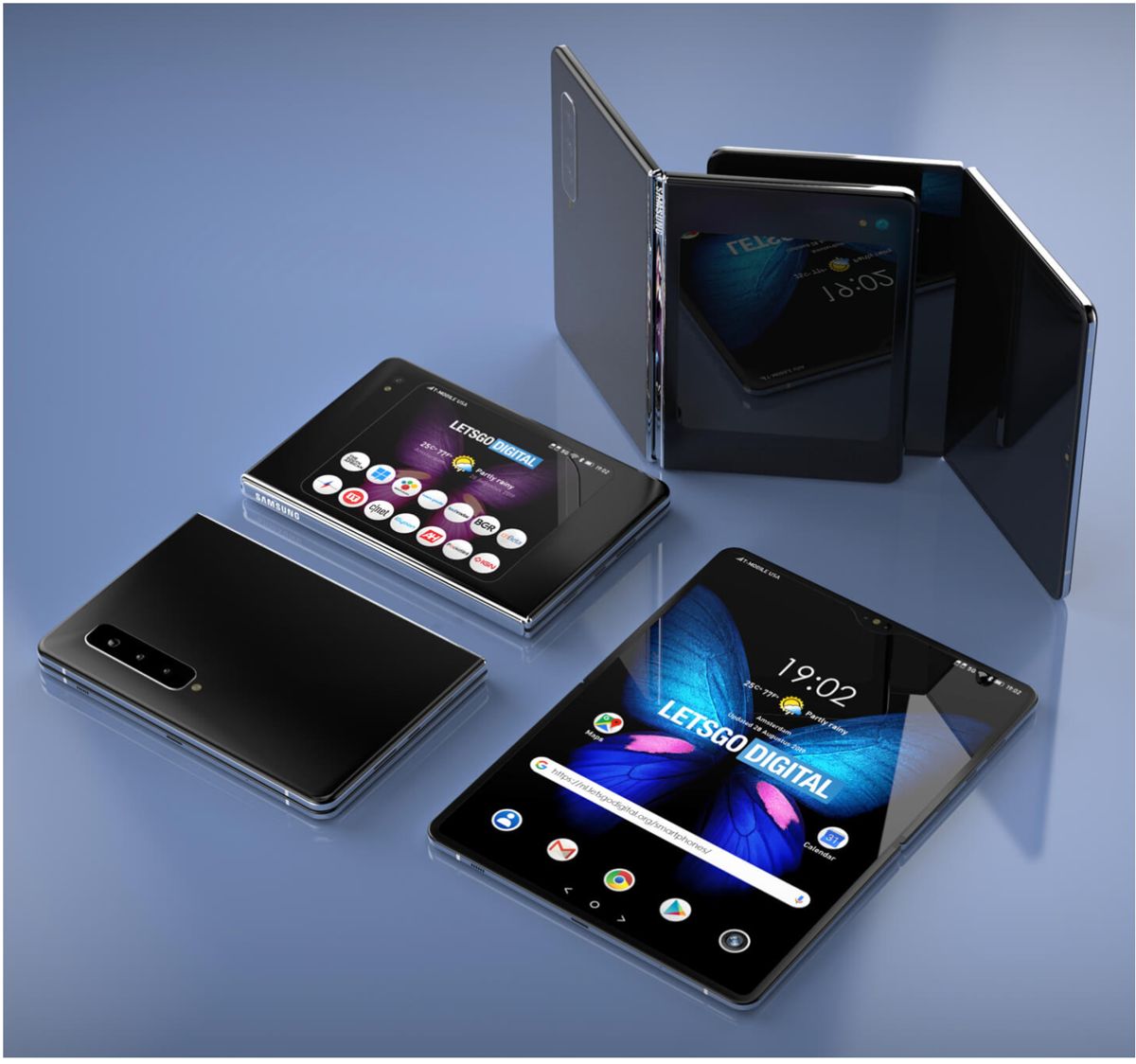
While both the Samsung Galaxy Fold and Huawei Mate X are foldable phones, both devices are designed differently. With the Galaxy Fold, Samsung has opted for a book-like design where users would unfold the handset like they would a book. Given that foldable smartphones are still new, it's not necessarily a guarantee that this is a design that will stick (even if seems to make the most sense).

This is why it's not surprising to discover that Samsung is actually exploring a variety of ideas for future Galaxy Fold handsets. This is according to a report from LetsGoDigital where they have found several patents related to the design of foldable phones.

According to the patent, at least two of the designs seems to be similar to the current-gen Galaxy Fold but with some slight changes made to the notch. It is the third design that is probably the most interesting, where it seems to indicate that Samsung is exploring the idea of a foldable phone that flips open like a notepad.

If this sounds familiar, it is because a previous patent had also suggested that this could be a design Samsung is exploring. This would also make it somewhat similar to what the foldable Motorola RAZR smartphone could look like. That being said, these are just patents which means that these are only ideas.

Whether or not Samsung actually implements them and turns it into a real product remains to be seen, but what do you think of these designs? Yay or nay?

Source: LetsGoDigital


from Phandroid https://ift.tt/2MQ2FwW
via IFTTT

Huawei Mate 30 launch date confirmed for September 19

If you loved what Huawei has done with its Mate series of smartphones, then chances are you're probably pretty psyched for its next smartphone, the Huawei Mate 30. The good news is that we won't have to wait much longer to find out about the phone in its official capacity. This is because Huawei has confirmed its launch for the 19th of September.

The company will be hosting an event in Munich, Germany, where they have confirmed that it is where the handset will be officially revealed. While there are many reasons to be excited for the phone, like its 90Hz display and a quad-camera setup, we are a little worried about the handset's usability.

In case you haven't heard, Google has recently confirmed that Huawei's upcoming handset will not come with Google Play services or Google-licensed apps. This is due to Huawei being on the US government's Entity List which prevents them from doing business with US companies, such as Google.

While a temporary reprieve was granted, Google notes that this does not extend to new products and only covers existing ones. Huawei has stated that they do plan to keep on using Android, although we're not sure how effective that will be since Google's services and apps do play a big role in the overall experience.

Huawei did recently announce their own HarmonyOS where the plan is to use it on all manner of smart products. The company stopped short of saying if it will eventually replace Android, so we'll just have to wait and see.


from Phandroid https://ift.tt/30OGrz2
via IFTTT

Nokia is dominating Android updates according to research

When it comes to pushing out Android updates for smartphones, there is no telling when a manufacturer will get around to it. Unless you plan on buying a Pixel smartphone, it's really anyone's guess when your phone's manufacturer will get around to it, but if you're hoping to avoid waiting too long for your update, perhaps Nokia could be a brand worth considering.

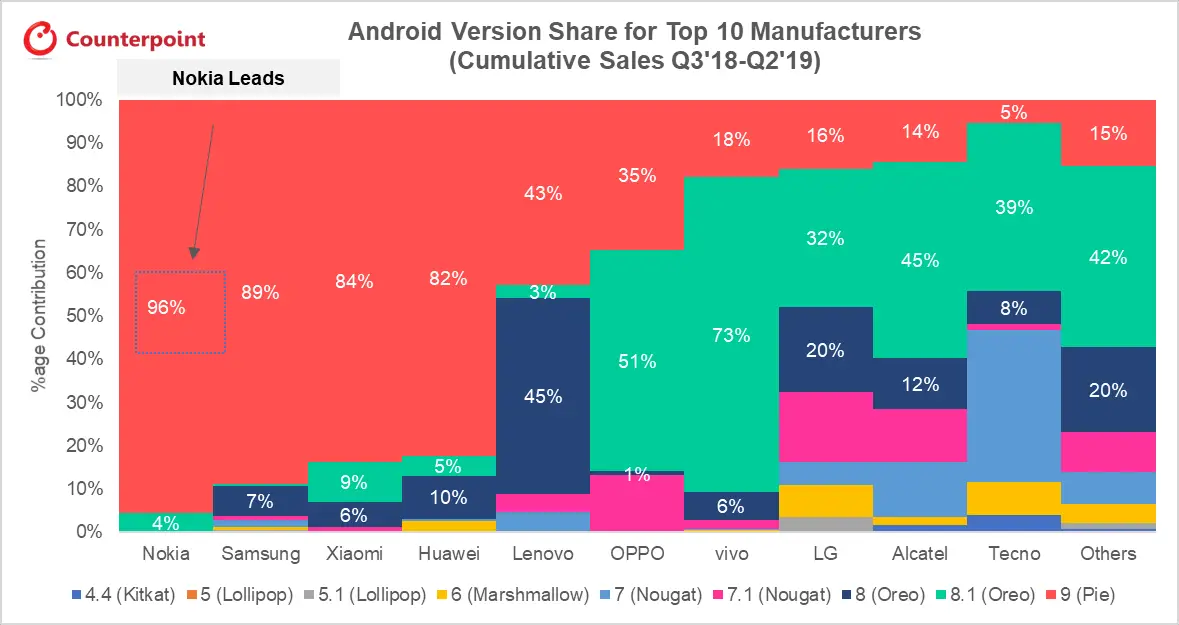
This is according to a recent report from Counterpoint Research in which they have found that based on various Android smartphone brands, Nokia is currently dominating the Android update game. It would seem that a whopping 96% of Nokia smartphones are currently on the Android 9.0 Pie update.

This is versus other companies like LG who only has 16% of its smartphones running on Android Pie. Samsung isn't too far behind at 89%, while Xiaomi is boasting 84%. For a brand that not many might necessarily consider for their next smartphone, Nokia is actually doing really well.

Just recently, HMD Global (who makes Nokia phones) announced that nearly all of its smartphones will get the Android 10 update, which hopefully will arrive in a timely manner as with its Android 9.0 Pie updates. OnePlus is also expected to improve on its updates where the company recently suggested that they might release the Android 10 update the same time as Google. Whether or not they will remains to be seen, but it's a promise we hope that they will be keeping.

Source: Counterpoint Research


from Phandroid https://ift.tt/2Zx5eKD
via IFTTT

Sunday, September 1, 2019

Securing Your Android Device for Business

Whether you're an employer or employee, there is a good chance that you will use your mobile device to access sensitive data. Indeed, the growing trend in BYOD (bring your own device) means that a business will run on multiple devices, many of which are not secured in the same manner as the PCs in the office.

 In short, your smartphone is a risk to business if it is not properly secured. Android devices are targeted more frequently by hackers than iOS devices for several reasons. But above all, it is because there are vastly more Android users, and hackers see it as a wider net to spread. 

Below we have highlighted some security measures – some obvious, some not so obvious – that you should be looking at if you use your Android device to complete work tasks. 

Disable Developer Mode

If you aren't using developer mode to simulate app stresses or capture bug reports, there is no reason it should be switched on. To improve the security, simply go to Settings and the Developer Option, and then toggle off the feature. A similar precaution should be made with Unknown Sources. 

Be Picky About VPNs

Many of us are using VPNs nowadays. But whether it's a free VPN or premium subscription, you should learn everything about the service before installing. Review sites are a good option, as they can tell you everything from the security details to a VPN speed comparison. These sites will detail the level of encryption and performance, but also red flag any VPN providers that are potentially harmful.

Two-Factor Authentication 

Yes, it is obvious and it's almost boring to keep banging on about password security, but according to the latest Verizon Enterprise Data Breach Investigations Report – seen as the gold standard in data risk research – passwords are tied to around 80% of data breaches. Hacking might have become more sophisticated, but the way in through the door is often still poor passwords and repeated passwords. Worse still, there is evidence that with so many devices and accounts, there is a kind of password fatigue among users. Do the right thing and get some two-step verification on your accounts. 

Be Wary Wi-Fi and Boot the Bluetooth

We mentioned VPNs above, which are always a good option if your job takes you out of the office and requires you to use public Wi-Fi. But often we forget about Bluetooth, which still has plenty of risks. If you do use Bluetooth a lot, say for your smartwatch or other wearables, then make sure to update the firmware in all your Bluetooth connected devices. But if you aren't using it, make sure to switch it off. 

Beware of Sophisticated Phishing

Let's be frank, anyone reading this site will feel pretty clued in about threats like phishing. It feels like the sort of attack to "other people", perhaps gullible people. But phishing has become much more sophisticated, and it's no longer the poorly worded and misspelled emails asking for your credit card details; it can be simple requests like phone numbers or dates of birth, all designed to create a broad portrait of you for fraudulent reasons. 

Beware of Geotagging

As mentioned above, cybercriminals aren't just after your business credit card details, they can try to acquire small details of who you are and what you are doing. If you are uploading pictures, location tags can be embedded into those photos. Simply turn off geotagging when it's not necessary to have it on. 

Remote Wipe

Despite the steps you take, there is always the chance that your device gets stolen. In that case, you want to have the option of wiping the data remotely. It'll cost you to have a subscription, perhaps a few dollars a month, but it is a question of weighing up that price against your business security. 


from Phandroid https://ift.tt/2ZqFWOS
via IFTTT

Top 5 ways to replace the headphone jack

Headphone jacks are quickly disappearing. Companies that once supported them are dropping them too, and some may not know what to do. Well we have you covered with some of the cheapest, and some of the best, options to take back a feature that should have never been removed.

Included dongle

Most smartphones that lost their headphone jacks come with an included dongle. They range from okay to pretty dang good, with examples of the latter being the Essential Phone and Razer Phone 2. It's free, you can use your existing headphones, and it's not the worst inconvenience. But make no mistake, an inconvenience it is. It's something you have to remember to bring, try not to lose, and something not always easy to replace.

Bluetooth
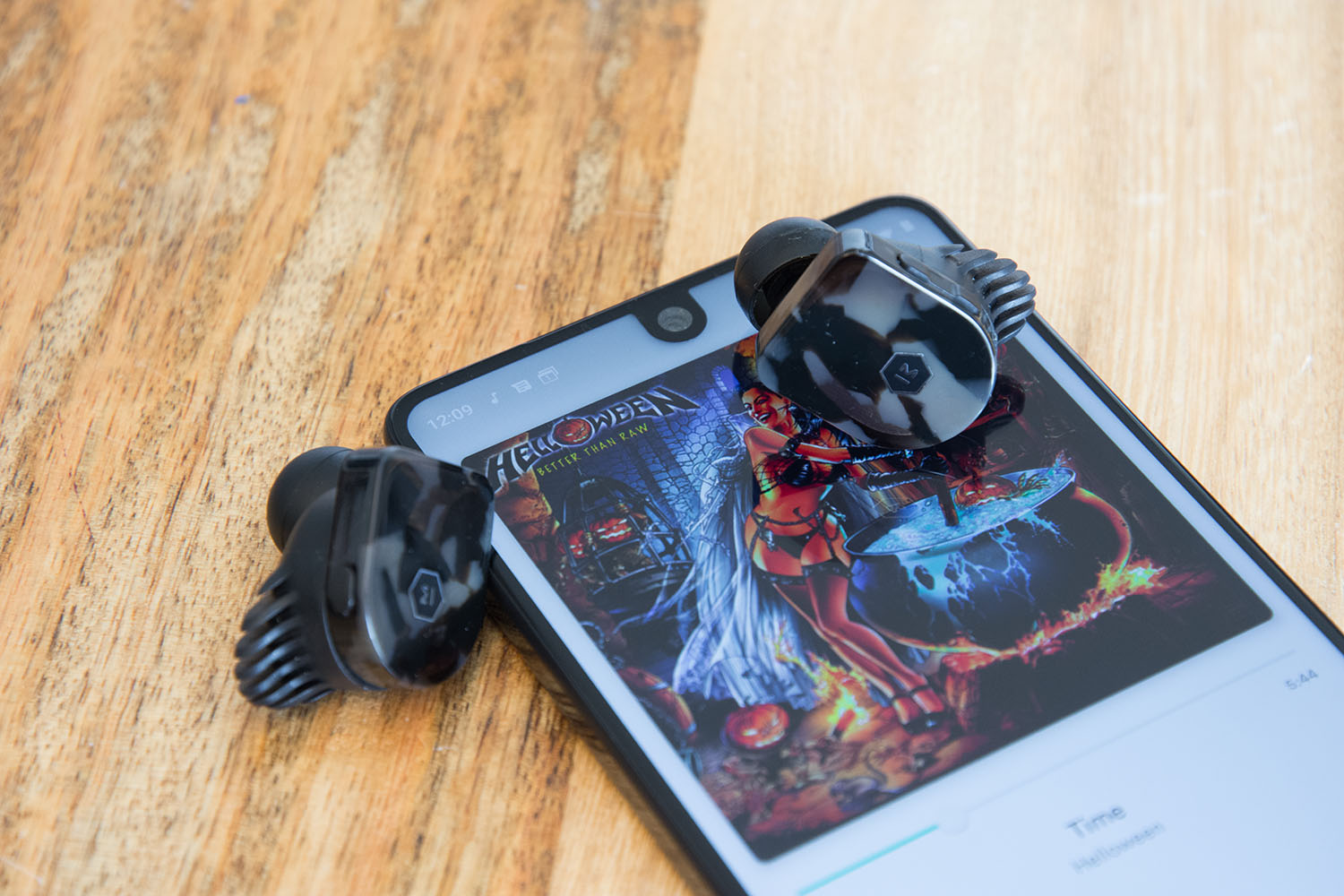
Bluetooth audio gear is the most obvious choice. If you've lost your headphone jack, make the jump and cut the cord. Enjoy the freedom of wireless earphones, and embrace the downsides of occasional connection issues and constant charging.

There are a bunch of amazing Bluetooth audio accessories now available so you have tons of options to choose from. You can go for some cheaper Sony Extra Bass on-ears, $100 Creative Gotlier Golds, or $130 Galaxy Buds. Or you can jump into the high end with the $350 Sony WH-1000XM3, $350 Bose QuietComfort 35 II, or $300 Master & Dynamic MW07.

Unfortunately, going too low end here does result in some serious connection issues and crappy sound. Some of the cheap stuff also sounds like crap, but this is not exclusive to Bluetooth.

HiFi dongle

Now that the headphone jack is gone, a bunch of HiFI dongles have appeared. While most dongles barely work and sound pretty bad, there are a few that are a serious upgrade over the stock one. HIDIZS is a popular choice, with its dongle costing only $43 and adding no bulk over the stock one.

The upgrade comes from a better digital-to-analog converter chip inside, one that can drive more powerful headphones and improve the sound on almost any earphones you throw at it. Well, maybe not your EarPods. If you care about audio at all, you'll hear the difference.

Inline DAC

The next step over a HiFi dongle is a full blown DAC/amp. You lose in portability, but you gain some serious power. The Creative SXFI AMP weighs only 15 grams and is smaller than many USB drives but can power up to 600 ohm headphones and push a lot of juice through audiophile headphones. It's an awesome experience on the go and can be used on your Android phone with the short C to C cable, as well as with your laptop (what, you think your laptop has a great headphone jack? Think again).

There's also NextDrive, which offers some high priced DACs that look like dongles but with some added bulk.

Just get a phone with a headphone jack
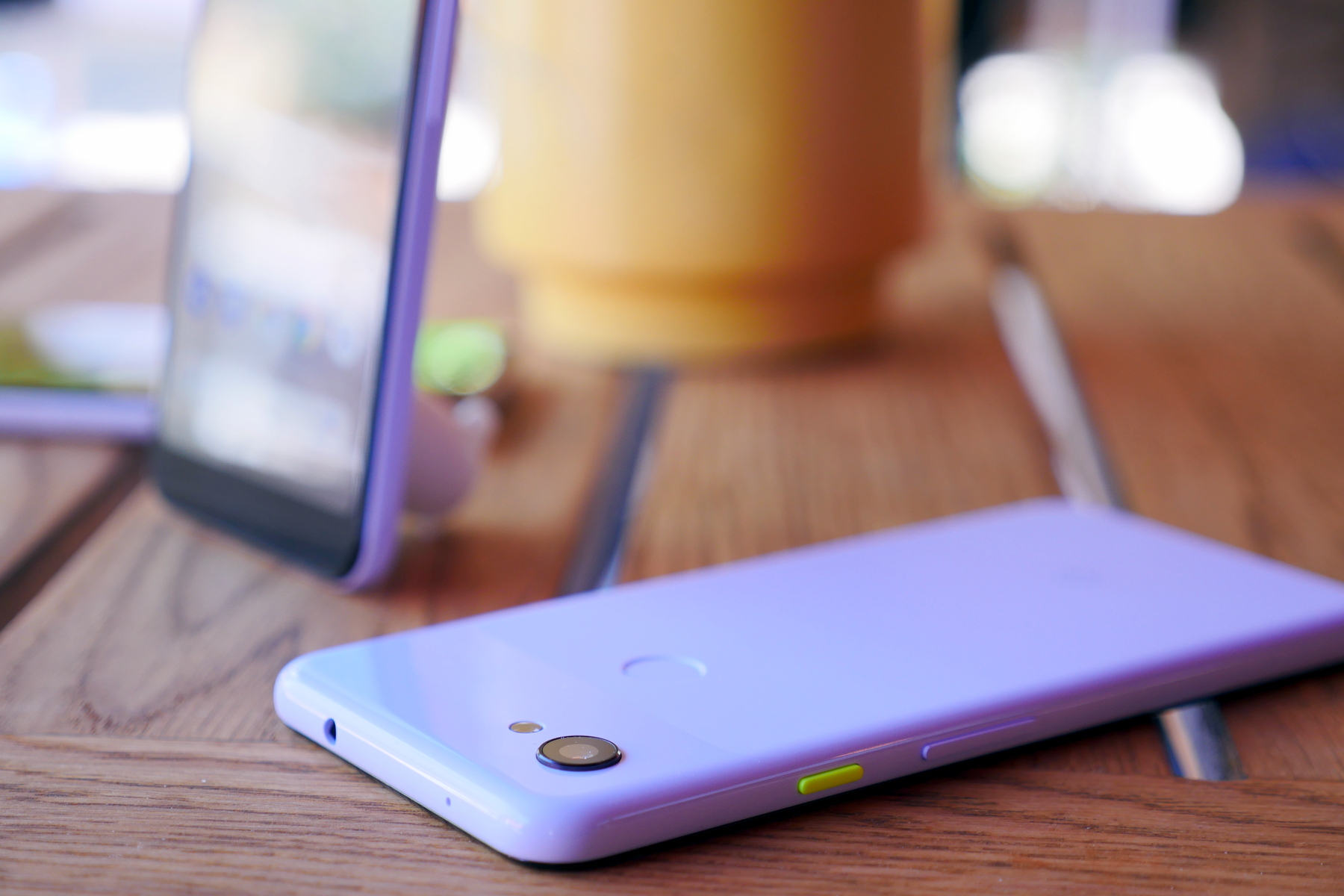
Honestly, for a lot of people this is the way to go. There aren't many phones that retain a headphone jack, but there are a few good ones. One of my favorites is the Google Pixel 3a, which starts at $399 and features much of what you'd expect from high end phones. Sure the speakers were downgraded and the processor is a bit slower, but it's still quick, smooth, and takes a mean photo. And unlike the higher priced phones, you get a headphone jack! Pay less, get more.

Now, the Pixel 3a's headphone jack is pretty mediocre, even by standard headphone jack standards. It'll be fine for many, but some will balk at the audio quality. So get an LG G8 ThinQ, which can be had for $500. It includes a Quad DAC, which invalidates the need for the above external DACs because it pumps out HiFi audio by itself. Now that's a great phone for the average audiophile.

There are still options for headphone jacks. Even though one of the biggest supporters of headphone jacks dropped the feature with the Galaxy Note 10, we still have some hope that the option will remain. Wired headphones aren't dead.


from Phandroid https://ift.tt/2PyrD6r
via IFTTT