Tuesday, February 26, 2019

Flaws in the 4G and 5G protocols allow location tracking and call interception

For the most part, when we make or receive a phone call, we expect a certain degree of privacy and security where we mostly assume that our calls aren't being spied on and our conversations aren't being listened on either. Unfortunately, a recently discovered flaw in 4G and 5G networks has cast some doubt on those assumptions.

A group of researchers, Syed Rafiul Hussain, Ninghui Li, and Elisa Bertino from Purdue University and Mitziu Echeverria and Omar Chowdhury at the University of Iowa, have recently discovered a flaw in 4G and 5G in which if exploited, could, in theory, allow an attacker to intercept your phone calls and track your phone's location.

One of those attacks, called Torpedo, exploits a weakness in the paging protocol (which is what carriers use to notify a phone before a call or text comes through). It has been discovered if calls are placed and canceled in a short period of time, it can trigger the paging protocol without alert the target, but at the same time give the attacker the location of their victim.

The Torpedo attack also opens up the door to more attacks, one of which is called Piercer which lets attackers determine the IMSI on a 4G network, thus opening up devices like "stingrays' which are typically used by law enforcement. This can then be used to determine the user's real-time location and log all phones within its range, with more advanced devices said to be capable of even intercepting calls and messages.

The researchers claim that in the US, all four of the major carriers are susceptible to the Torpedo attack. The researchers are expected to present their paper at the Network and Distributed System Security Symposium in San Diego on Tuesday.

Source: TechCrunch


from Phandroid https://ift.tt/2IMkpse
via IFTTT

Samsung’s mid-range lineup gets a boost with the Galaxy A30, Galaxy A50

While Samsung's highlights at MWC 2019 were definitely its Galaxy S10 lineup, the 5G version of the Galaxy S10, and its Galaxy Fold foldable smartphone, the company has not forgotten about its customers who might not be able to afford its high-end flagship handsets. The company has since taken the wraps off their mid-range lineup which consists of the Galaxy A30 and the Galaxy A50.

We have heard rumors of both handsets in the past where it was claimed that despite their mid-range status, they might be borrowing some features from the Galaxy S10. It turns out that the rumors were true, with the Galaxy A50 sporting a triple camera setup on the back with a 25MP + 5MP + 8MP combo, while the Galaxy A30 will feature a double camera setup with a 16MP + 5MP sensor combo.

The selfie cameras on either handset are also no slouch as we are looking at a 25MP front-facing shooter on the Galaxy A50 and a 16MP front-facing shooter on the Galaxy A30. Both phones also feature a similar display of 6.4-inches with a resolution of 1080×2340. While Samsung does not mention the chipsets used, the Galaxy A50 will be packing a quad-core processor while the Galaxy A30 will feature a dual-core processor.

There will also be a difference in RAM where the Galaxy A50 will be available in 4GB/64GB and 6GB/128GB RAM/storage configurations, while the Galaxy A30 will be available in 3GB/32GB and 4GB/64GB configurations.

Other features include fast charging, Samsung Pay, Bixby, and an in-display fingerprint sensor for the Galaxy A50, while the Galaxy A30 will use a regular fingerprint sensor placed on the back of the phone.

Source: Samsung


from Phandroid https://ift.tt/2tBcMub
via IFTTT

Monday, February 25, 2019

Samsung Galaxy Note 10 could come with four cameras on the back

These days we're starting to see companies introduce more cameras to the back of their phones to the point where dual cameras have become the acceptable standard, and having a single camera feels downright pedestrian. This is why we're seeing companies such as Huawei and Nokia launch devices with three cameras or more.

Samsung has also hopped onto the triple camera bandwagon trend with their recently announced Galaxy S10, but that could change with the Galaxy Note 10 which is scheduled for a launch later in the year. This is according to a report from SamMobile who claims that according to their sources, the Note 10 could be packing a quad camera system on its back.

Details about the camera system are unknown at this point in time, but we should point out that this will not be Samsung's first quad camera smartphone. The company had previously released a quad camera smartphone with the Galaxy A9 back in 2018, and the 5G Galaxy S10 also features a quad camera setup, all of which suggests that quad cameras could be where Samsung will be headed in the future.

We're not sure if the Note 10's camera setup will be reusing the setup on the Galaxy S10 5G, so we'll just have to wait and see. The Note 10 is still quite a long way off from being announced as this usually takes place in the later part of the year, so until then take it with a grain of salt for now.

Source: SamMobile


from Phandroid https://ift.tt/2Vk78s8
via IFTTT

Google Pixel 3 Lite and Pixel 3 XL Lite become a little more real with FCC filing

The existence of an affordable Pixel 3 series has been rumored for some time, and a recent filing at the FCC suggests that there could be a Pixel 3 Lite and Pixel 3 XL Lite in the pipeline.

Of course, we already knew that – the idea of a Lite version of the Pixel 3 series had been all but confirmed, but the pass through the FCC adds weight that Google is making moves to make it happen. Several Google devices have appeared on the FCC website with the model numbers G020BG020CG020DG020FG020G, and G020H, which are likely the various models of the Pixel 3 Lite and Pixel 3 XL Lite.

The listings don't go into a great level of detail as Google has marked the FCC reports as confidential to obviously prevent information leaking out, which seems fruitless at this point. What it does say is that the devices will launch with Android Pie (obviously) and connectivity options include the usual Bluetooth, Wi-Fi, NFC, and LTE.

While the Pixel 3 and Pixel 3 Lite are almost identical to the non-Lite counterparts, the devices are set to have a Snapdragon 670 processor and plastic bodies instead of glass to help hit a lower price point. The Lite versions of the Pixel 3 are still expected to feature the same camera modules, so that's great news for anyone looking for one of the best camera experiences on Android at an affordable price.

Now the devices have hit the FCC it's only a matter of time before the Pixel 3 Lite launches, which could be as soon as Spring.

Source: FCC Via: PhoneDog


from Phandroid https://ift.tt/2XiQ87v
via IFTTT

Nokia 9 PureView first impressions: a bit of a letdown

Within a minute of getting my hands on the new Nokia 9 PureView I was being given excuses as to why the phone wasn't the device for me unless I was "really" into photography. Wait, aren't the people telling me this, the same people who are trying to sell me the device?

I'd like to say they were wrong but sure enough, the more I got into it, the longer I found myself frustrated waiting for the images to process, and the enormous amount of lag between switching camera modes.

Something I did like was the adoption of stock android. I'm a fan after all and I think the more uniform manufacturers can become in providing a one-stop shop recognizable OS the better in my opinion.

The demo area was cozy, to say the least with only three devices on a tightly packed stand. Never the less I persisted and gave it 20 minutes of my time. Twenty minutes dare I say that I'll never get back.

I was losing interest rapidly as I waited and waited for images to process. After force closing the camera app a couple of times, I moved on to the general usability. The phone itself was snappy (I'm using that word a lot this year) but as I've said before there is very little that differentiates the general speed and feel of the so-called high-end smartphone market.

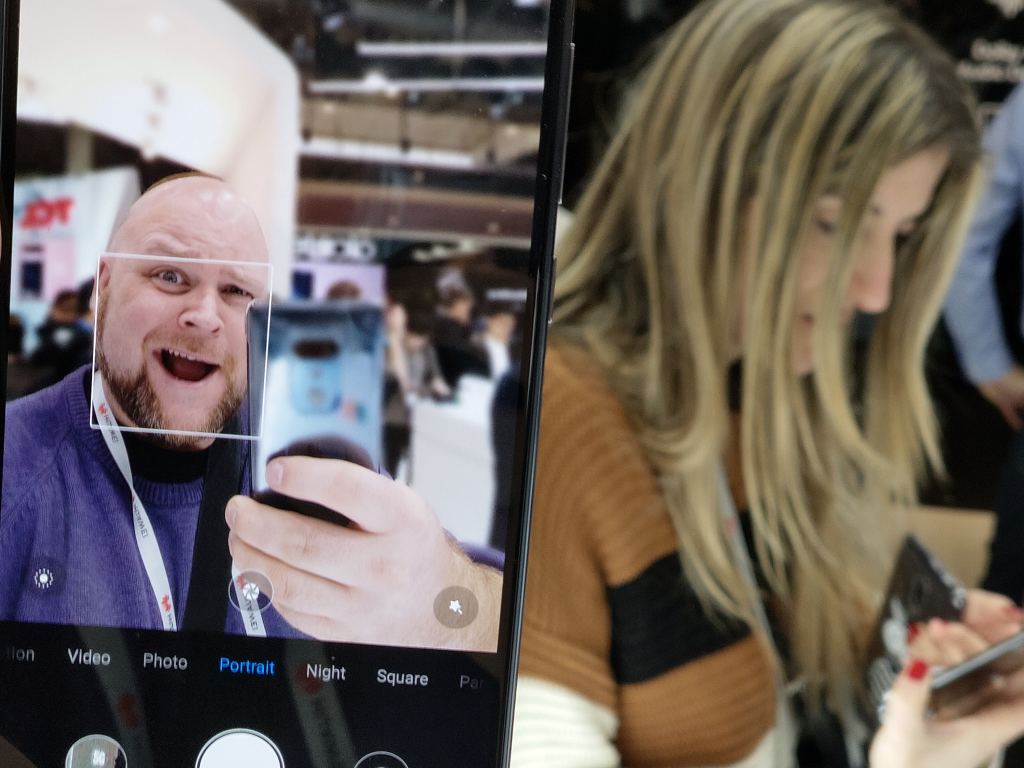
I suddenly forgot that I hadn't taken a selfie. To my surprise, there was no lag or processing time, probably because a selfie is a very basic task, using just the one camera.

I feel like I'm being overly harsh to Nokia though, the five camera array on the rear really is something to behold. It reminds me a little of the Light L16 camera from a couple of years back, only prettier. HMD actually partnered with Light on the camera module and image post-processing, so the similarities in design shouldn't be surprising. 

I was fully intending on getting a good handful of images to demonstrate the great details you can expect from the Nokia 9 PureView, but the camera app force closed a few times and it just didn't work out. I'll definitely pop in again and scoop some more before I head home from MWC.

Those bags under my eyes genuinely developed during my experience with this phone, if I had hair I'd be pulling it out in frustration. Maybe the phone was having a bad day, maybe I wasn't a good user? I raised a few initial concerns to the Nokia reps only to be told: "This is basically an R&D project for us, right?" That, I can absolutely respect, but don't try to release a birth a device into the world that will likely be DOA if the image processing experience isn't cutting the mustard.

As my 20 minutes (maybe more like 40) with the phone was coming to an end, one final jib came my way "You've been sleeping on that unit for ages over there" to which I replied "That's because I'm still waiting for the images to finish processing"

"You're breaking my heart," she said as we parted ways with a chuckle.


from Phandroid https://ift.tt/2Vh8hAB
via IFTTT

Xiaomi Mi 9 camera test: truly impressive for the price

The Xiaomi Mi 9 may not be heading to the US, but it's likely to be one of the most popular Android devices in Asia and Europe this spring since the phone packs most of the specs we've seen inside the Samsung Galaxy S10 for a mere €499. While Xiaomi phones have typically offered great performance with top of the line specs, camera performance has typically been sub-par when compared to other flagship devices. That doesn't seem to be the case with this year's Xiaomi Mi 9.

The camera specs include a triple camera on the back featuring a 48MP main sensor with a 27mm lens, a 12MP sensor with a 2X zoom lens and a 16MP that's paired with a 13mm ultra-wide lens. Up front, Xiaomi's thrown in a 20 MP sensor with an f/2.0 lens. We honestly weren't expecting much when we started snapping pictures with this phone, but we were pleasantly surprised by the results. 

Xiaomi Mi 9 first impressions

Take a look at the phone and video samples we managed to capture with the Xiaomi Mi 9 and let us know what you think.

Xiaomi Mi 9 camera samples


from Phandroid https://ift.tt/2ICe5Dh
via IFTTT

Xiaomi Mi 9 first impressions: rough around the edges, but still quite a good

Sometimes it's hard to see the light through the stack of glass sandwiches on offer when it comes to smartphones in 2019 and then along comes one phone that makes you reminisce about the good old days of Mobile. When buying a mobile felt like you were giving your friend money to start their own business because you were fully supportive of them and their ideas. Well along comes Xiaomi, for a long time not even on my radar as a smartphone manufacturer. I'd always associate them with cheap smart home products I could find on Aliexpress.

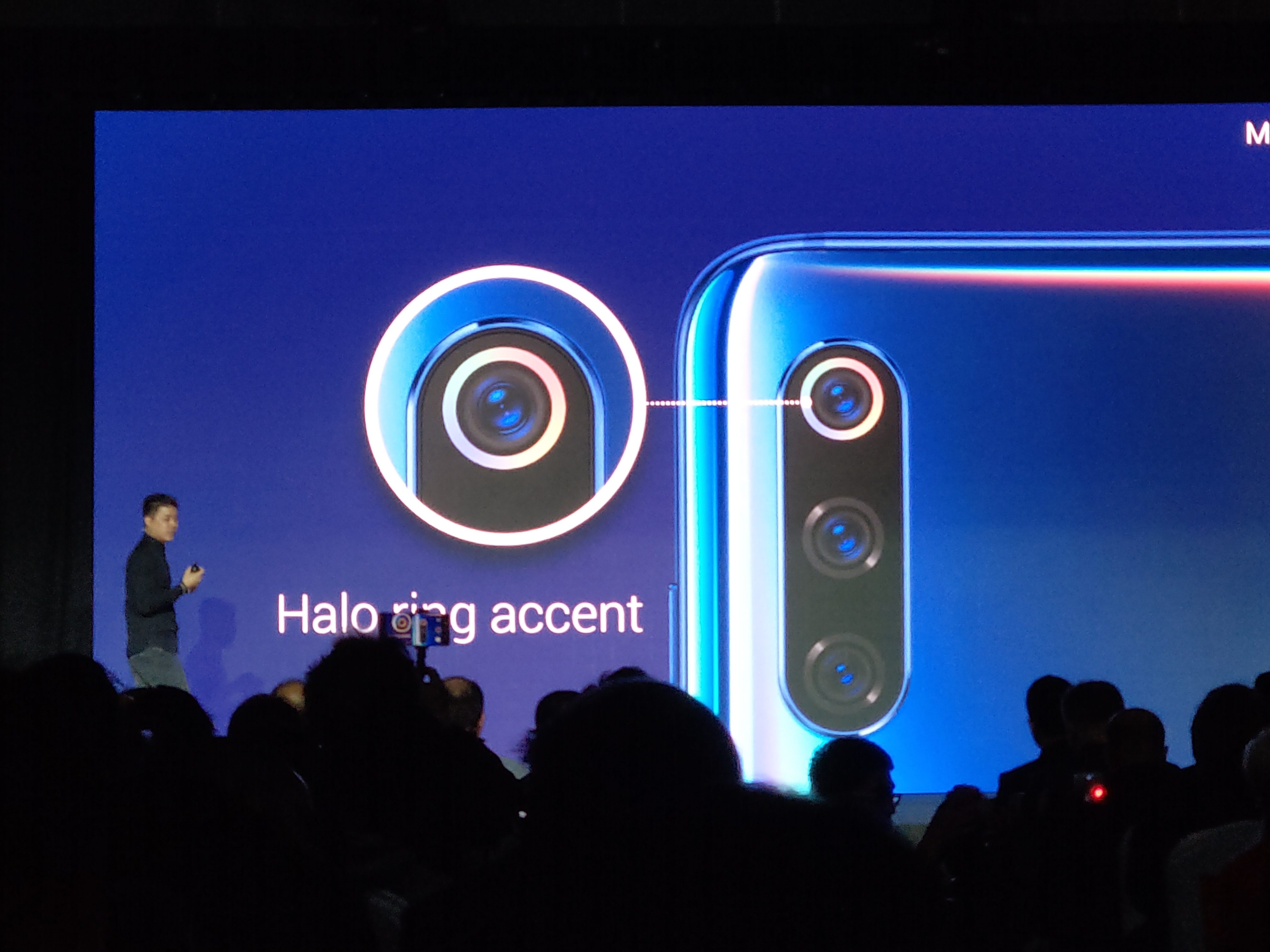
I was lucky enough to sit in on the Launch event at MWC 2019 and even before the presentation began I was immediately at ease whilst I watch the comedic rolling ads advertising their line of (over 2000) smart appliances. The presentation was warm and fuzzy and first and foremost the Mi Fans had the initial shout out of the day. The whole event made me feel like I was at an HTC event circa 2013. That family feeling was in full flow.

Now that I was suitably drunk in love with Xiaomi as a company – I couldn't wait to get my hands on the Mi 9 in the demo area. That's where things started to fall apart. The demo area was packed, and the people were unforgiving so I plumped for a few photos and decided to grab some face time the next day. That was today and I'm glad I waited.

The phone is a beautifully packed glass sandwich with little flourishes in the right areas, the software is reminiscent of a stock android wannabe and I didn't "hate" the custom icons for the apps.

The camera is quick and literally "snappy" with images filling up the gallery instantly. The AI portrait modes are clunky but they work and the video seems to be quite smooth. There was very little delay in switching between modes and colour representation seems pretty spot on. Look out for a post and video of sample shots from my quick 20 min hands-on session.

Almost all handsets at MWC are locked into some kind of Demo mode or another so I couldn't experience all features as if it was right out the box. Regardless, I was really impressed. There was little to no lag when opening and switching apps, which you'd come to expect in 2019 – Chrome booted up and didn't stutter while scrolling the online news. But I only had one tab open (we all know how that story goes).

It didn't feel heavy or too big for my small hands and even though it was tethered to the table my fingers didn't get any dents or fatigue from using it heavily for 20 mins or so.

Xiaomi's message at MWC was one of universal appeal and attention to detail. The holographic halo around the rear camera is even endorsed by Gaudi himself. Joking aside, it's been a long time since I seen and held a smartphone that wasn't an HTC or Pixel that made me feel like I wouldn't mind owning one. But maybe I'm just a fool in love. (Hopefully, someone at Xiaomi will send one through so I can give it a good test over a month or so.)

Based on first impressions alone and being completely honest, I'd say that the Xiaomi Mi 9 kind of stole the show in terms of release tactics, looks and overall message.

I'd like to hear your thoughts, is Xiaomi a brand you use or have been considering? Or are they, just another manufacturer is a sea of same?


from Phandroid https://ift.tt/2BRnBwL
via IFTTT