Tuesday, February 26, 2019

OnePlus is making a hard pass on wireless charging

OnePlus is expected to unveil their OnePlus 7 this year and it will represent the company's latest smartphone efforts to date. Unfortunately, it seems that if there is one feature that fans have been asking for that has yet to make an appearance, it would be wireless charging in which OnePlus seems to still be insistent on not including.

Speaking during an interview at MWC 2019, OnePlus CEO Pete Lau cites how the company believes that their wired charging solution is better compared to the "far inferior" wireless charging.

"OnePlus charging is one of the best. Wireless charging is far inferior."

According to Lau, it seems that wireless charging is still not quite at the place OnePlus would like for them to introduce it to their phones. The company is instead working on helping to develop wireless charging technology to help deliver more power to make it charge faster without producing too much heat, but when exactly OnePlus' solution will appear on the market is unclear as Lau himself has stated that he doesn't have a date yet.

It is true that OnePlus does have one of the faster wired charging solutions in the market to date. It is also true that wireless charging in its current state isn't quite as fast as many would like, although companies such as Xiaomi have made some inroads by offering 20W wireless charging support for its recently launched Mi 9.

There are benefits to wireless charging such as not having to plug and unplug your device, but for now, it appears that OnePlus believes that the cons outweigh whatever pros current wireless charging has to offer, so don't expect to see the feature make its way into the OnePlus 7.

Source: CNET


from Phandroid https://ift.tt/2ExFnqh
via IFTTT

How to use Google Duo video calling from your computer

Google's Duo video calling app has been around for a few years now and is regarded as being one of the best options for Android if you're looking for a quick and easy video calling platform. It's technically been cross-platform for a while now with the iSO app, but good luck getting your Apple-using friends to install it.

Today, Google expanded its reach with Due by making it available on computers through a web browser. Due is currently compatible with Windows and Mac devices and will work in Chrome, Firefox and Safari. Microsoft Edge isn't currently supported, but we could see that browser added to the list in the future. Similar to the Android and iOS apps, Duo for the web allows you to place and receive voice or video calls, just as long as both users are already registered with Duo.

Follow the instructions below to make or receive a Duo video or voice call from your computer's web browser

How to place a Duo video or voice call from the web on your computer

  • Open your web browser (Chrome, Safari or Firefox) and navigate to duo.google.com
  • Log into your Google account
  • When prompted, select yes to allow Duo to send notifications to your browser
  • Select a contact and choose voice or video call

To receive Google Duo calls on your computer, you simply need to have your web browser open. When someone calls you through Duo, a browser notification will appear, allowing you to answer the call through the computer browser. Duo will also ring your phone at the same time, so you will have the option to choose which device you want to answer the voice or video call with.


from Phandroid https://ift.tt/2EjTyOK
via IFTTT

Light wants to bring its crazy camera tech to future Xiaomi smartphones

It used to be that having a single camera on the back of our phones was good enough, but Light decided that they would kick things up a notch with the Light L16, a phone that packed a whopping 16 cameras on its back. It was not quite the revolution the company had hoped for, but it certainly sparked something.

The company has recently announced that they will be entering into a partnership with Chinese smartphone maker (and ranked number four in the world) Xiaomi, where they will be jointly developing "new imaging solutions for smartphones". If this is what we think it is, don't be surprised to see future Xiaomi handsets packing more than a triple camera on its back. According to Zhu Dan, VP, smartphone division, GM of camera department, Xiaomi:

"We are thrilled to partner with Light to leverage their advanced imaging solutions for our future devices. Xiaomi works tirelessly to remain at the forefront of smartphone innovation, and perfecting smartphone photography is a key focus for us. We are excited to work on devices using Light's technology so our users can produce even more amazing photos."

Xiaomi is not the only company that Light has partnered with so far. The company had previously worked with HMD Global on the Nokia 9 PureView with its penta-camera array. Unfortunately, based on our brief hands-on, it was rather disappointing. The rep at MWC attempted to pass it off as an "R&D project", but hopefully its release will see the kinks ironed out.

In the meantime, Xiaomi has launched the Mi 9 at MWC in Barcelona whose camera actually surprised us in a good way.

Source: Light


from Phandroid https://ift.tt/2EcFE0E
via IFTTT

5 reasons you should buy the Huawei Mate X over the Samsung Galaxy Fold

In the space of a week, the world now has two foldable smartphones. Both Samsung and Huawei have entered a market that seemed like a futuristic dream with the Galaxy Fold and Mate X, respectively.

While the devices share a common theme of foldable displays to reveal a larger screen, that's about where the similarities end. The Samsung Galaxy Fold and Huawei Mate X are two very different implementations of a folding phone, and here are 5 reasons why we think Huawei has taken the lead over Samsung.

No notch

In order to have a camera on the larger screen when the device is unfolded, Samsung has created what can only be described as the largest notch every produced. The off-center cut-out would appear to make watching a full-screen video an unnecessary obstacle. This has to be caveated with the notion that we've not had hands-on with the Samsung Fold, but the obtrusion suggests the experience will be worse than current notches.

The Huawei Mate X, on the other hand, has a notch-less display because Huawei decided that to take selfies, one would use one of the existing cameras on the other side of the device in folded mode. This is a much better implementation and means the Mate X has a better display experience.

Full-screen displays

Because of the lack of a notch on the Huawei Mate X, the device achieves a full-screen 8-inch unfolded display at a resolution of 2480 x 2200, compared to the Galaxy Fold's 7.3-inch 1536 x 2152 display. The display on the Mate X is much more aligned to what you would expect from a foldable screen experience for immersive media consumption.

Folding design

The way in which the two devices fold is the area in which the Mate X and Galaxy Fold differ most. Samsung opted for, what looks like, a very sturdy mechanical mechanism that locks in place, much like a laptop hinge. This means that the Galaxy X folds inwards like a book, which means that the two screens never actually touch and rest with a small gap between the screens at the hinge. The Mate X folds the other way, truly bending the display in half. This creates an actual foldable display but creates a very real concern for the longevity of the screen folding in half to create creases, whereas the Galaxy X doesn't fold the display directly. However, as far as the implementation of a foldable display goes, assuming Huawei have addresses the durability concerns, the Mate X does it in a way more consistent to what is expected with a foldable smartphone.

Bigger battery
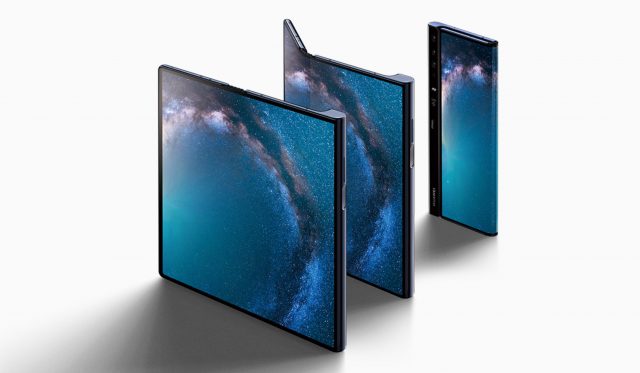
More displays mean a larger drain on the battery, so the larger capacity on the Mate X will help that screen on time. The difference is minimal, but the Galaxy Fold has a 4380mAh battery, while the Mate X has a 4500mAh battery. Also, the Galaxy Fold technically has three displays to power, whereas the Mate X has a larger but single screen, so arguably will draw less power.

Design

While both foldable smartphones feel like beta devices that will naturally mature as the years' progress, when compared directly, the Mate X is more consistent with how a device of this type should look. The slimmer profile of 10.8mm when folded compared to the 17mm of the Galaxy Fold would suggest the Mate X is much easier and pleasant to hold. Huawei also seems to have put more thought into how a foldable device should be used, providing a superior media experience with the larger display and omitting the camera in favor of the hardware on the back of the device.

Roundup

The launch of the Mate X showed that Samsung hasn't got the market cornered, and while the Galaxy Fold is an incredible showcase of engineering, the Mate X definitely will give it a run for its money. As mentioned, both devices are nothing more than beta releases for the company to claim it was first to market, and I wouldn't recommend running out to buy either at well over $2000 a piece, but it gives a good insight into where companies are going, and I'm excited.


from Phandroid https://ift.tt/2GRD8Rp
via IFTTT

Xperia 10, 10 Plus and 1 first impressions: one screen ratio to rule them all

When I think Sony, I think Bravia. I think OLED rich color TVs and cinematic sound even thousands of colorful bouncy balls in San Francisco. But in 2019 I wouldn't have necessarily thought, mobile phones. My last Sony device was the Sony Ericsson W810i, the World's first Walkman phone. It was the first product to combine a mobile phone, a high-quality digital music player with up to 30 hours' battery life, and a 2 Megapixel camera. All of this was packaged in a slim, lightweight device (for the time) with an ultra-stylish design. It was one of my first proper camera phones. I also got dumped by text message in 2007 on that thing, ah memories!

Memories fade, but today I had a welcome blast from the past. Sony seems to have content creators and cinematographers at the forefront of their new 21:9 aspect ratio displays. Yes, you heard right, 21:9 across the range of new Xperia handsets. The 10, 10 plus and the higher end Xperia 1.

We'll delve into the specs of the handsets in a more in-depth post, but in the meantime here are my initial thoughts on the new Xperia range.

Sony introduces the world to its 21:9 smartphone cinematic display

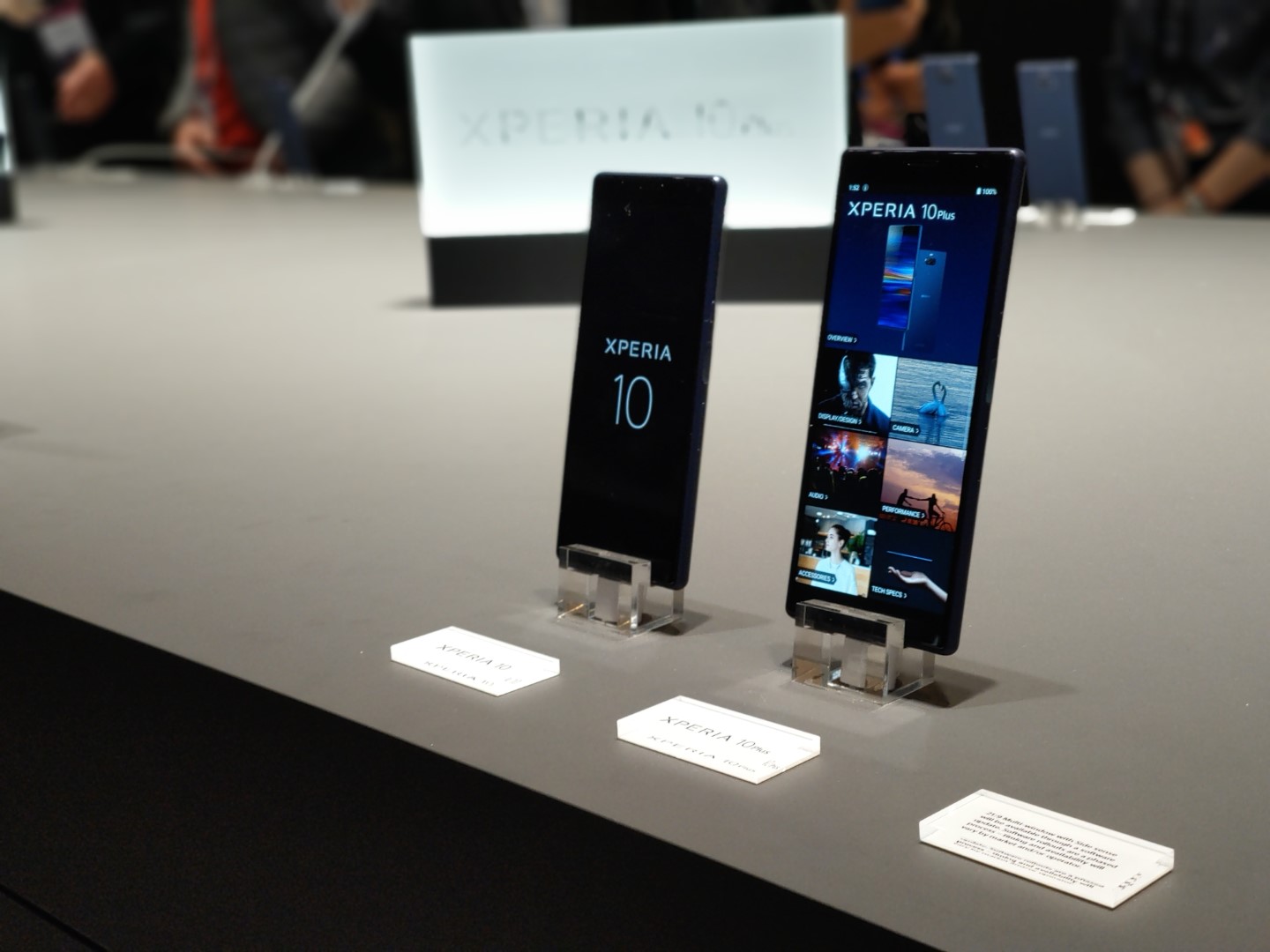
The Xperia 10 is unsurprisingly the 10 plus's smaller counterpart. From the outset, the device appears tall, very tall! The matte tactile body feels great in the hand and the software is not laggy or sluggish. Everything works as it should. The sound is pretty crisp and the video playback appears quite smooth. The screens are vibrant as you'd expect from a Sony handset. Dual rear camera arrays on both flash and subtle NFC logo.

Not much changes from the outside with the 10 Plus, just an all-important extra half inch in height and a lovely brushed aluminum back. Both the 10 and 10 Plus are nice and light, leaving no fatigue in my hands during the 20 mins of intense playing around.

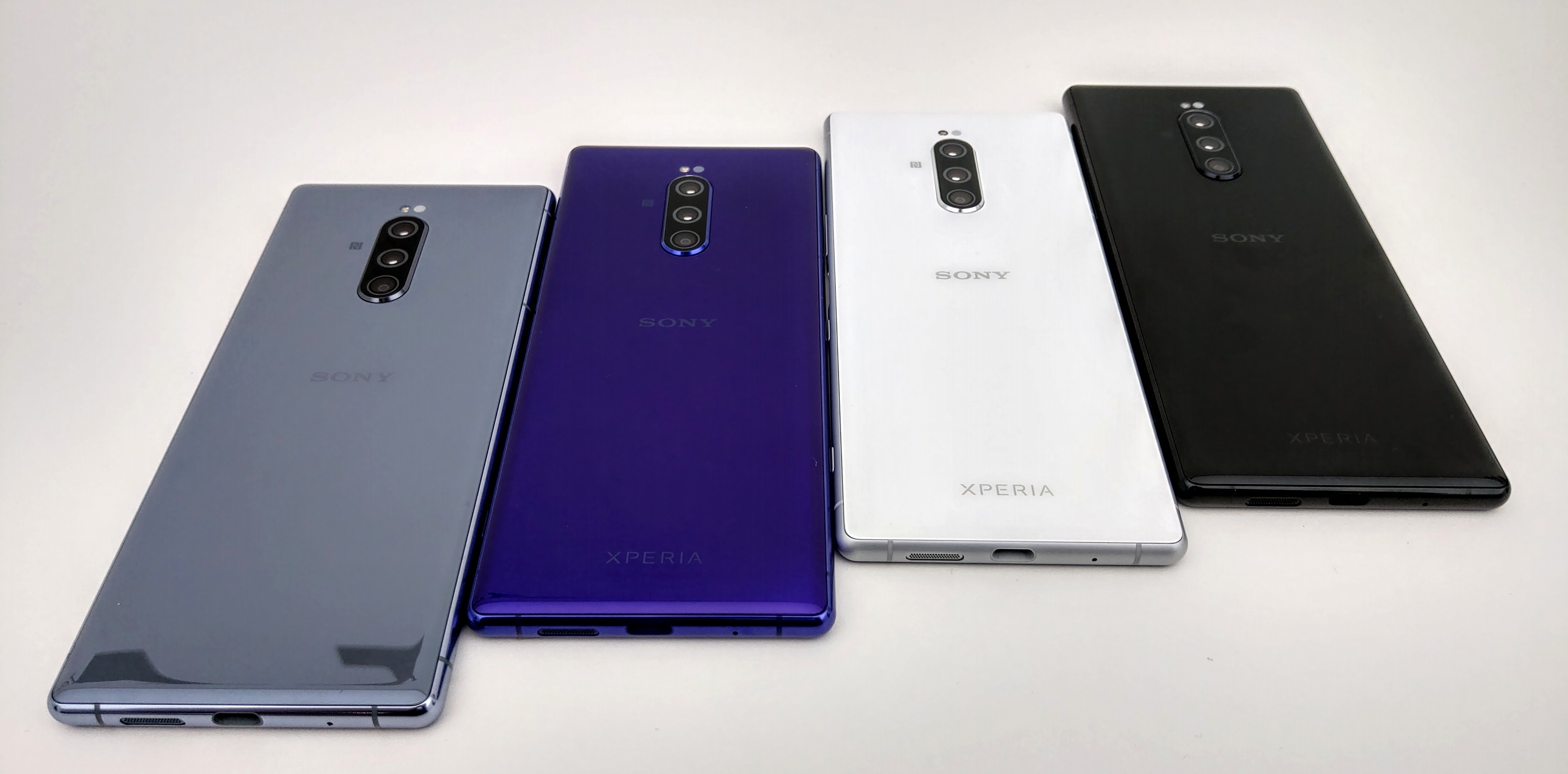
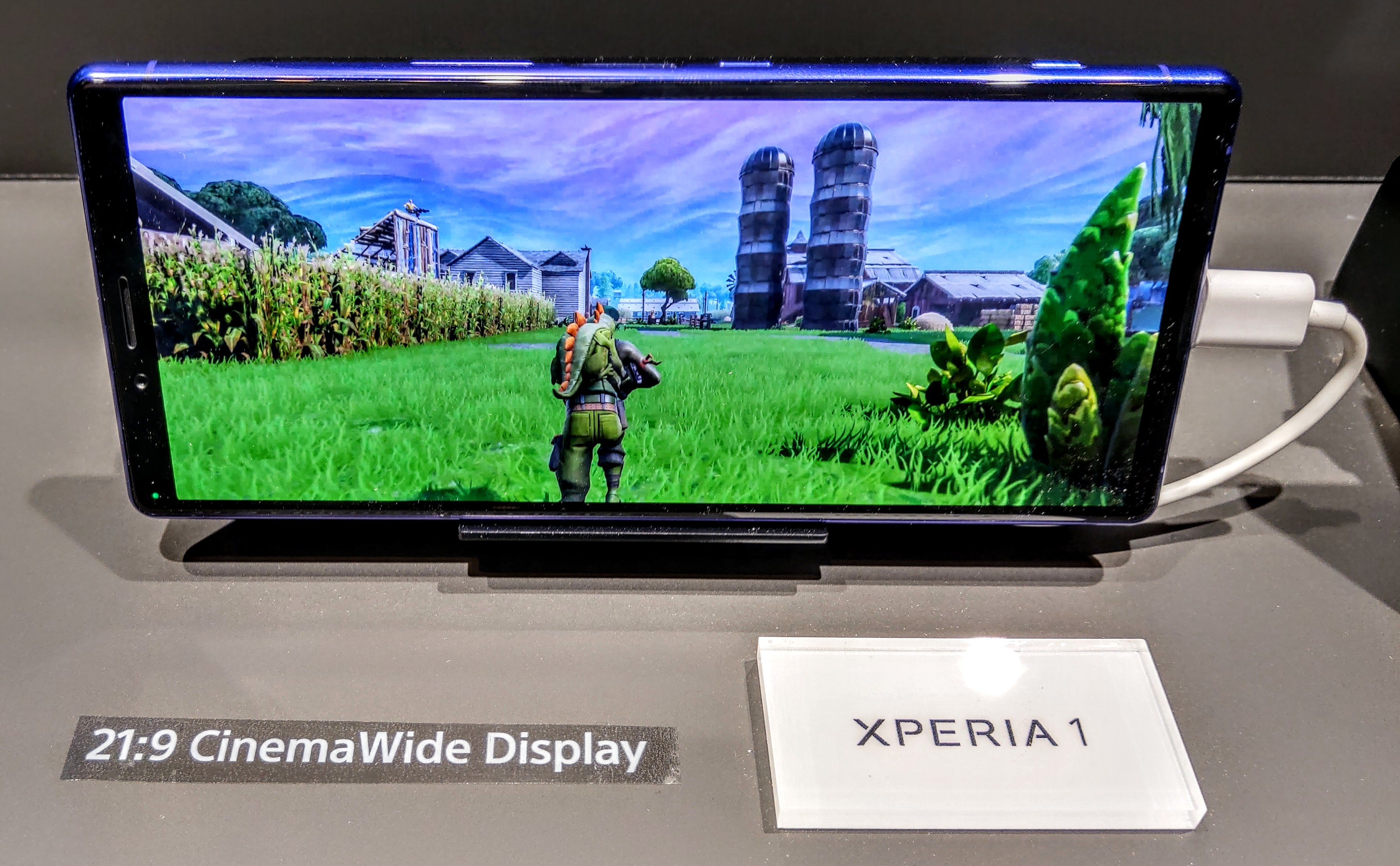
Next up is the Xperia 1, very different in comparison to its siblings. It's Glass sandwich, with a triple camera on the back, a gorgeous 21:9 cinematic 4K display. During the demo there was a side-by-side comparison between Sony's Xperia 1 and its Bravia TV range, showing how close the two are tuned. What really had me enthusiastic to learn about the Xperia 1 was the sheer amount of R&D and attention to detail that Sony has put into this new device. I got the sense that they want everything to be perfect before it goes on sale.

It has the potential to be a creator-centric masterclass from Sony, one of the world's leading creative entertainment company. Think of this as your one-stop-shop "Pocket Studio." Everything about this device screams "Make great things! and tell them you did it on a Sony Xperia 1!"

Sony Xperia 10 & 10 Plus camera test

The results of the Xperia 1's Eye Auto Focus and Studio Modes were really impressive and gaming was also a prominent part of the pitch.  I'm not a gamer in any sense of the term, but the cinematic screen felt like it went on forever when held in the horizontal plane. My lumpy thumbs didn't get in the way of the screen and the gameplay felt very natural with the ultra-wide display.

The sound was loud and punchy with the inclusion of a haptic bass engine that you can adjust on the screen along side the volume slider. There was some sound distorted at full volume and full bass, but i won't hold it against them, it's not final software and there is quite a way to go before they get that cinematic sound perfected.

I was not allowed to use that camera since the software isn't ready. In fact, all demo units were locked to a background with no icons or menus. Disappointing? Yes. Understandable? Of course. I'm just hoping to get the opportunity to test this one out when it's ready.

All in all, I was pleasantly surprised with the Xperia 10 and 10 plus and really impressed with the Xperia 1 on paper. I hope everything works out for Sony on this one since it could change the game for the next generation of content creators amd cinematographers.


from Phandroid https://ift.tt/2VkPWCL
via IFTTT
Sony Xperia 10 & 10 Plus camera test: good, but not great

Sony showed up at Mobile World Congress with three new phones, the Xperia 1, Xperia 10 and Xperia 10 Plus. While the Sony Xperia 1 is the flagship device of the company's 2019 lineup, the phone wasn't running final software at the show. We did get a chance to play around with the Sony Xperia 10 and 10 Plus for a bit, so we snapped a few pictures and recorded some video clips to see what the quality is like.

The camera specifications were pretty simple by today's standards. The Sony Xperia 10 has a dual-camera setup featuring a 13MP main sensor that's paired with an f/2.0, 27mm lens, a 5MP depth sensor for portrait shots and then an 8MP selfie camera which has an f/2.0, 24mm lens. The Sony Xperia 10 Plus has the same selfie camera, but its dual-camera setup on the back has an upgraded 12MP sensor with an f/1.8, 27mm lens and a second 8MP sensor with an f/2.4, 53mm telephoto lens.

The two cameras did deliver several respectable shots in the harsh lighting of the demo room, but the results were a bit lackluster. Check out the embedded video or the gallery below to see the images for yourself and let us know what you think in the comment below.

Sony Xperia X10 Photos

Sony Xperia X10 Plus Photos


from Phandroid https://ift.tt/2XpLJje
via IFTTT

The Nubia Alpha wraps a flexible-display smartphone around your wrist

So we've seen foldable smartphones that have the ability to fold in half, but what about a device whose display can be wrapped around your entire wrist? That's what ZTE's Nubia has been working on as the company has since unveiled their latest product: the Nubia Alpha.

This is actually not the first time that Nubia has hinted at their plans for a flexible display device. They unveiled a concept back at IFA 2018 and launched a teaser for it ahead of MWC 2019, and now it looks like it has become a reality. The Alpha is a smartwatch which features a 4-inch 960×192 OLED display where the screen is manufactured by a company called Visionox. They are boasting that this is the largest wearable flexible screen in the industry, which from what we can tell, seems to be a pretty accurate claim.

The Alpha is powered by a Qualcomm Snapdragon Wear 2100 where it will be accompanied by 1GB of RAM, 8GB of storage, and a 500mAh battery. There will also be Bluetooth, WiFi, and 4G eSIM support, which means that when used together with its own data plan it can run independently of your smartphone, and in theory can also be used to place and make calls. Nubia has even managed to stuff a 5MP camera if you want to take some selfies.

Given that this is a wearable, the Alpha will feature the standard fitness tracking capabilities such as sleep, exercise, and heart rate monitoring. The basic Bluetooth-only model will be sold priced at €449 while the eSIM model will retail for €549 when they are released later this year.

Source: Engadget


from Phandroid https://ift.tt/2T5wI7t
via IFTTT