Friday, August 17, 2018

Review: Pioneer AVIC-W8400NEX with Wireless Android Auto

It's no secret that the auto industry is notoriously behind when it comes to cutting-edge technology. While the smartphones we carry in our pockets are extremely powerful, the heat units in our cars are typically underwhelming and often not very intuitive to use.

Google's Android Auto has been around for a few years now, giving users a simple and clear UI while allowing them to tap into the media they have stored on their phones and using their device's web connection for navigation and Google search queries. But while Android Auto really hasn't changed much over the past few years, the company's for Wireless Android Auto systems are finally coming to market, making the system feel like it's an organic piece of the vehicle rather than an afterthought add-on.

The Pioneer AVIC-W8400NEX we tested is an after-market head unit which costs $1,200 (you can get it for a bit less on Amazon). It was originally announced at CES 2018 to show off its Wireless Android Auto features, but it took roughly 6 months before it and competing Wireless Android Auto head units hit the market. Pioneer does have a cheaper model available, but while the Pioneer AVH-W4400NEX sells for $500 less, it has a resistive touch screen and goes not have built-in GPS and navigation which means you will need to rely exclusively on your phone's GPS and data connection for navigation. In addition to Wireless Android Auto support, both options also support the new Wireless CarPlay feature are well. Unfortunately, we didn't have any iOS devices on had to test it out.

Since Android Auto really hasn't changed much over the past few years, we're only going to cover the features that are new. As you might expect, wireless connectivity is the biggest feature here. Once your device is paired with the Pioneer AVIC-W8400NEX, the system will automatically boot Wireless Android Auto when the car is turned on, eliminating the manual step of removing your phone from your bag or pocket, finding the USB cable (which typically has dropped to the floor) and plugging in your phone. This means you can simply get into the car and start driving which is extremely convenient when you're getting into your car for a short drive and simply want to keep your phone in your pocket. For now, the Wireless Android Auto feature only works with Google's Pixel devices, but newer Android devices will gain Wireless Android Auto support once they are updated to Android 9.

With Android Auto, users have always been able to ask Google questions, but the latest upgrade now claims that it has Google Assistant built in. Honestly, the only thing that's really changed is the branding since the company is trying to get Google Assistant in as many places as possible. You can ask it to set a timer, change the temperature of your Nest thermostat at home or turn off the smart lights in our house if they're connected to Google Assistant, but it won't let you play games or other simple things that your Google Home speaker can do. Honestly, having games available seems like a huge oversight since Google Assistant's trivia and mad libs games would be amazing on road trips or a great way to pass time while sitting in traffic.

Of course, you can always bypass Google Assistant's Android Auto limitations by mirroring your phone's display on the screen by using Mirracast compatible device. Naturally, you will need to have the phone plugged in via USB to use this feature, but you'll then you'll have access to all of your phone's features by using the Pioneer AVIC-W8400NEX's touchscreen display.

One complaint we do have about Pioneer's head units is that it takes a good 15-20 seconds to boot when you turn your vehicle on. It may not sound like a long time, but it's an eternity if you're in a hurry and need to enter your destination in Google Maps. It would be nice if Pioneer and others would take note from smartphone makers and build-in a battery into the system so that it can go into sleep cycle when the vehicle is turned off so that the unit doesn't have to go through a full boot sequence every time you start the vehicle.

In our book, Wireless Android Auto is a must-have feature for your car and the Pioneer AVIC-8400NEX is currently the best option available if you're looking f an after-market upgrade to your car's stereo. It may be expensive, but it's definitely worth the price if you spend a lot of time in your vehicle.

Buy the Pioneer ACIV-W8400NEX from Amazon

PIONEER AVIC-8400NEX Rating: star_fullstar_fullstar_fullstar_fullstar_empty (4/5)

The Good

  • Wireless Android Auto is a game changer
  • Every media-input option imaginable
  • Google Assistant in the car is a bit smarter

The Bad

  • Boot-up time is pretty slow
  • User interface is laggy at times
  • Very high price point

The Bottom Line

Wireless Android Auto in Pioneer's new AVIC-W8400 is a must-have upgrade for anyone who spends a lot of time in their vehicle, especially if you own an older vehicle that's in sore need of a head-unit upgrade.


from Phandroid https://ift.tt/2wbQakO
via IFTTT

Wednesday, August 15, 2018

9 things you’ll love about the Samsung Galaxy Note 9

The Samsung Galaxy Note 9 was officially unveiled last week. The phone may look really similar to last year's Note 8, but Samsung has packed it with with a ton of new features which should justify its ludicrous $1,000+ price tag. We've put together a list of the top 9 features you'll love about the Samsung Galaxy Note 9. If you have any other features you love about the Samsung Galaxy Note 9, feel free to drop them in the comments below.

Pre-order the Samsung Galaxy Note 9 (FREE Duo Charger & DEX Dock)

No-notch display

We've seen a lot of gorgeous displays on smartphones in 2018, but most of those devices have had a notch cut out at the top. While there's nothing inherently bad about the notch, there's something oddly satisfying about using a phone that has a full display that's usable from edge to edge.

512GB of storage

Remember the days when your phone only had 4GB of internal storage? The 128GB of storage on the base Galaxy Note 9 is pretty phenomenal, but Samsung's also offering an upgraded model with 512GB of storage. And since the phone also supports microSD cards, you can add another 512GB of expandable storage and walk around with 1TB of storage in your phone.

8GB of RAM

Since 6GB of RAM has become the new norm on flagship smartphones, Samsung decided to offer a model of the Galaxy Note 9 with 8GB of RAM. While that may sound a bit absurd, anyone who's used the OnePlus 6 with 8GB of RAM will tell you that it's impossible to give up once you've tried it. If you don't play a lot of games, the 6GB model will likely suit you just fine, but we'd recommend picking up the 8GB model if you're planning on playing Fortnite for Android or any of the other multi-player online shooting games which have come out recently.

Water Carbon Cooling System

Like most other 2018 flagship smartphones, the Samsung Galaxy Note 9 is powered by a Qualcomm Snapdragon 845 SoC with 6GB of RAM (you can get 8GB of RAM if you're willing to spend a bit more). This means that it is theoretically on the same playing field as everyone else when it comes to performance. But since Samsung wanted the NOte 9 to be a step ahead of the competition, it packed the NOte 9 with a Water Carbon Cooling System. The unique cooling system keeps the Galaxy Note 9 cooler, allowing it to operate at peak performance for much longer than other devices runnings a Snapdragon 845 chip.

Dual-aperture camera

Like the Samsung Galaxy S9+, the new Note 9 also comes with a dual-aperture camera lens. This means the aperture can be switched between f/1.5 and f/2.4. Most people will likely always stick with the lowest aperture possible, but switching from f/1.5 to f/2.4 will come in handy when you're trying to get a shot of your friends and keep the background in focus.

S-Pen selfies

This one may sound like a gimmick, but it's honestly one of the features we love most about the new phone. The Samsung Galaxy Note 9's new S-Pen comes with Bluetooth LE, allowing it to be more functional than it's been in the past. But the feature we're excited for the most is its ability to use the S-PED as a selfie remote. This means you'll be able to set your phone up across the room to take a selfie or even flip the phone around at taking a picture with the front-facing camera.

AI camera

Smartphone cameras have gotten really good these past few years. While the sensors inside the phones have stayed roughly the same size, manufacturers have turned to smarted software in an effort to improve image quality. The Galaxy Note 9's camera comes with a new AI system which is able to detect the subjects in the frame and automatically adjust exposure, saturate and white balance to deliver a much better picture.

4,000 mAh battery

While there's a lot to love about the Samsung Galaxy Note 9, the phone's 4,000 mAh battery is likely the feature at the top of most people's lists. The larger battery allows the phone to last through the most intensive workday if you're a heavy user or even last you two days on a single charge if you're not the type of person who checks their phone every other minute.

Repositioned fingerprint sensor

One of the biggest complaints about last year's Galaxy Note 8 was the positioning of the fingerprint sensor on the back of the phone. Samsung put it right next to the camera sensor, forcing you to put fingerprints all over the lens every time you wanted to unlock your phone. Fortunately, Samsung came to its senses this time around, positioning the fingerprint sensor below the cameras, centered on the back of the phone. This makes it a lot easier to reach since it's lower on the device and saves you from having to wipe off the camera lens every time you want to take a picture.


from Phandroid https://ift.tt/2MqGs8b
via IFTTT

Leak suggests HTC may no longer build its own phones

After the underwhelming launch of the HTC U12+, you might find it surprising that HTC is planning a mid-range successor to its flagship smartphone. From what we can tell, the HTC U12 Life is still on track to launch this fall, but a new rumor claims that HTC will not actually be building the HTC U12 Life itself. According to @LlabTooFeR, HTC is working with an ODM to build the HTC U12 Life.

While there's no indication that HTC is giving up on building smartphones itself, it seems HTC has found it to be more economical to have someone else build its smartphones rather than using its own manufacturing facilities and its own employees.

HTC U12 Life rumors specs

  • Display: 6-inch 2160×1080 Full HD
  • Processor: Qualcomm Snapdragon 636
  • RAM: 4GB
  • Storage: 64GB
  • Cameras: 16MP & 5MP dual-camera (main), 13MP (front)
  • Battery: 3,060 mAh

We're not sure how much money HTC will be saving by outsourcing the construction of its phones to another manufacturer. For now, the rumor claims that the HTC U12 Life is the only device in HTC's portfolio that isn't going to be made by HTC. The HTC U12+ is still be made in-house, but that could also change if sales of HTC devices continue on the same trajectory.

If the next flagship HTC device was no longer built by HTC, would that change your purchasing decision? In other words, if an HTC smartphone isn't built by HTC, is it really an HTC smartphone?


from Phandroid https://ift.tt/2KTQyd7
via IFTTT

Monday, August 13, 2018

How to install Fortnite for Android on non-Samsung phones

Fortnite for Android is one of the most anticipated games we've seen in a long time. EPIC Games initially launched the Fortnite Beta for Android, locking it down to a select number of Samsung devices. But now, they're opening it up to quite a few other Android devices, just as long as the phone is running a powerful processor and has 3-4GB of RAM. You can find the full list of compatible Android phones on the Fortnite Beta for Android official landing page.

Unfortunately, EPIC Games has chosen to release the mobile version of Fortnite directly through its website rather than putting it on Google Play. EPIC Games isn't happy about the cut Google takes from app and games sales and would rather handle distribution of the game on its own. This means you'll need to download the APK from Fortnite's website and sideload it on your phone, but once the initial installation is complete, EPIC Games will be handling updates to the game directly through its own installer.

If you've been dying to play Fortnite on your Android phone, follow the instruction below.

Sign up for Fortnite Beta for Android

  1. Visit the Fortnite Beta for Android landing page
  2. Verify that your device is on the list of compatible devices
  3. Click the "Signup for Fortnite Beta for Android" link
  4. Enter your email address

Install Fortnite Beta for Android

Once you've handed over your email to sign up for Fortnite Beta for Android, the waiting game begins. Since EPIC Games is trying to ensure the best experience possible, they are handing out invites in waves to ensure that things are running smoothly on their servers. Once you make the cut, you'll receive an email with the instructions to download the Fortnite Beta for Android Installer with all the instructions needed to get the game up and running on your Android phone.

We've heard from some of you who claim to have gotten your invitation in a few hours, but like most everyone else, we're still waiting for our Fortnite Beta for Android invitation after signing up for it nearly 24 hours ago.


from Phandroid https://ift.tt/2MFFvpq
via IFTTT

Saturday, August 11, 2018

DEAL: Buy Xiaomi’s Mi A2 or the Mi A2 Lite for up to 10% off

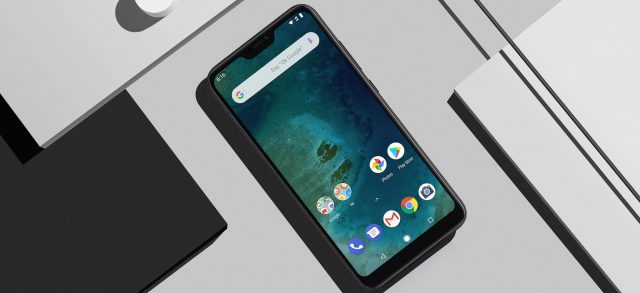
Last year's Xiaomi Mi A1 was one of the most sought-after Android One phones. It offered pretty decent specs, a sleek design and a dual-camera and stock Android at an extremely attractive price. The new Xiaomi Mi A2 and Xiaomi Mi A2 light were announced just a few weeks ago with an upgraded spec sheet and a few design tweaks. The Xiaomi Mi A2 and Mi A2 Lite aren't going to go head-to-head with flagship Android devices, but that's not really the point. These phones are built to offer a well-rounded experience with incredible battery life and stock Android – something we've all been craving for a very long time.

Xiaomi Mi A2 specs

The Xiaomi Mi A2 comes with a 6-inch 2160×1080 display, Qualcomm Snapdragon 660 processor, 4GB of RAM, 12MP + 20MP dual-camera setup on the back, 20MP selfie cam with LED flash on the front, 32GB of storage, dual-SIM support and a 3,000 mAh battery wrapped in an aluminum body with Gorilla Glass 5 protecting the front display.

Discount price: $265.99

Xiaomi Mi A2 Lite specs

The Xiaomi Mi A2 Lite has a smaller 5.84-inch 2280×1080 display with a notch cut-out, Qualcomm Snapdragon 625 processor, 3GB of RAM, 32GB of storage, 12MP + 5MP dual-camera on the back, 5MP front-facing camera, dual-SIM support, a larger 4,000 mAh battery inside and the same aluminum and Gorilla Glass 5 body. The cheaper device also has a microSD card slot, expandable up to 256GB.

Discount Price: $189.99

These two devices are officially not available in the US, Canada and many other countries across Europe, but GearBest has the Xiaomi Mi A2 listed for $265.99 (8% discount) and the smaller Xiaomi Mi A2 Lite is selling for $189.99 (10% discount from the usual price). These discounts are only expected to last a few days, so make sure you act quickly if you've been waiting to get your hands on either of these devices. 


from Phandroid https://ift.tt/2nuBERj
via IFTTT

Thursday, August 9, 2018

Watch the Samsung Galaxy Note 9 unveiling LIVESTREAM

In just a few minutes, the Samsung Galaxy Note 9 Unpacked Livestream will begin. For your convenience, we've embedded the video below so that you can just sit back and enjoy the show. If you're not caught up on all the Samsung Galaxy Note 9 detail yet, we've compiled all the Galaxy Note 9 rumors and leaks into a single post for easy reference. So, sit back, relax and don't forget to jump into the comments to share your thoughts on the new Samsung Galaxy Note 9.


from Phandroid https://ift.tt/2MvJcOo
via IFTTT

Wednesday, August 8, 2018

Samsung Galaxy Note 9, what to expect from tomorrow’s unveiling

If you haven't already heard, Samsung is planning to unveil the Galaxy Note 9 at an event in Brooklyn, New York on August 9th. That's right, the new Samsung Galaxy Note 9 will be announced tomorrow! While we've known about the launch date for a few weeks now, no one was really expecting the device to show up this soon. Last year's Samsung Galaxy Note 8 event was held on August 23.

Since we know that many of you are diehard Note fans, we thoughts we'd round up everything we know about the Samsung Galaxy Note 9 into a single post before tomorrow's launch. Of course, many of the Samsung Galaxy Note 9 details we have so far are based on leaks and rumors, so there may be a few details that might be different once tomorrow rolls around.

Samsung Galaxy Note 9 unveiling, retail launch dates and pricing

As mentioned already, the Samsung Galaxy Note 9 will be unveiled tomorrow in Brooklyn, New York. The press-only event is scheduled to start at 11am ET. Check out the local time list to see when the event is taking place around the globe.

  • New York: 11am ET on Thursday, Aug. 9, 2018
  • California:8am PT on Thursday, Aug. 9, 2018
  • UK: 4pm BST on Thursday, Aug. 9, 2018
  • Central Europe:5pm CET on Thursday, Aug. 9, 2018
  • Russia: 6pm UTC on Thursday, Aug. 9, 2018
  • India: 8:30pm IST on Thursday, Aug. 9, 2018
  • China: 11pm CT on Thursday, Aug. 9, 2018
  • Australia:1am ACT on Friday, Aug. 10, 2018
  • South Korea: 12am JST on Friday, Aug. 10, 2018
  • Japan: 12am KST on Friday, Aug. 10, 2018

If you want to watch the Samsung Galaxy Note 9 launch, this post will be updated with the official live stream video of the event once it's made available.

As far as the retail launch of the Samsung Galaxy Note 9 s concerned, the device is expected to go on sale on August 24 in the US and several other markets. The price of the Samsung Galaxy Note 9 is vary from market to market, but most are expecting it to sell for $929 in the US, £869 in the UK and €899 across the rest of Europe.

Samsung Galaxy Note 9 specifications

Rather than bore you with a few paragraphs about the rumored specs the Samsung Galaxy Note 9 is expected to have, we've compiled everything we've been able to find in a simple bulleted list.

  • Processor: Qualcomm Snapdragon 845, Exynos 9820
  • Display: 6.3-inch QHD+ Super AMOLED
  • RAM: 6GB, 8GB
  • Storage: 64GB, 128GB, 256GB, 512GB
  • Main cameras: 12MP dual cameras with OIS, 2X zoom, variable aperture
  • Front camera: 8MP
  • MicroSD card slot
  • Battery: 3,850 – 4,000 mAh (multiple conflicting rumors)
  • S Pen: Bluetooth support, music controls, camera remote, remote device unlock, app launch
  • Fingerprint scanner: rear-mounted
  • Heart rate sensor
  • Iris scanner

The rumored specs aren't anything out of the ordinary, but there are a few things we'd like to highlight. Thanks to the 512GB model and the microSD card slot on the phone, the Note 9 could offer up to 1TB of storage.

While there were rumors floating around that Samsung was going to use an in-display fingerprint sensor on the Note 9, those claims seem to have fizzled out with Samsung saving that feature for its 2019 flagship devices.

Last year's Samsung Galaxy Note 8 had a disappointingly small battery. We're still not exactly sure how large the battery on the Galaxy Note 9 will be since there conflicting rumors, but we should at least see a 3,850 mAh cell inside the phone.  This should allow the phone to last substantially longer than last year's phone and give move people at least a day and a half on a single charge.

Samsung Galaxy Note 9 design

If you've been keeping up with the Samsung Galaxy Note 9 leaks, you probably know that we've seen a lot of leaked images of the phone. Unfortunately, the design of the new device isn't changing much when compared to last year's model. Based on what we've seen the front of the Samsung Galaxy Note 9 will look identical to its predecessor, keeping the exact same setup for the speaker and other sensors above the display.

The bottom of the phone will look similar as well with a 3.5mm headphone jack, speaker grill, S Pen slot and centrally positioned USB C charging port. Fortunately, Samsung will be making changes to the back of the phone by moving the fingerprint sensor below the dual-camera sensors. The placement still looks a bit awkward, but it could be that the design team didn't have a lot of time to make it look perfect if the original plan was to include an in-display fingerprint sensor.

As far as colors go, the Samsung Galaxy Note 9 will be available in Mystic Black, Engineered Blue and Artisan Copper. Naturally, the different color options may not be available in all regions across the globe. Samsung is also looking to add a bit of flare to the Engineered Blue Galaxy Note 9 by including a neon yellow S Pen. The contrast between the two colors looks amazing, but those who like to be a bit more subtle will likely opt for another color.

The body of the Samsung Galaxy Note 9 is expected to measure 161.9 x 76.3 x 8.8mm, making it shorter than last year's device, but also thicker and wider. The extra volume of the Galaxy Note 9 is likely needed to fit in the phone's larger battery.

Final thoughts

As you can see, there's a lot to be excited about with tomorrows unveiling of the Samsung Galaxy Note 9. The phone doesn't offer anything out of the ordinary, but its larger battery should make it a must-buy for anyone who loved Samsung phones and wants a device that can keep up with heavy usage.

Feel free to share your thoughts on the Samsung Galaxy Note 9 in the comments. Based on everything we know, are you planning on buying the Samsung Galaxy Note 9?


from Phandroid https://ift.tt/2OQY1wC
via IFTTT